The Luminous Mysteries — Mysteries of Light — meditate on the public life of Christ, from His Baptism in the Jordan to the Last Supper. They were introduced by Pope John Paul II in 2002 to illuminate the years of Jesus's ministry, bridging the Joyful and Sorrowful Mysteries.
The Luminous Mysteries, or Mysteries of Light, are the set added by Pope John Paul II in 2002: the Baptism of Christ, the Wedding at Cana, the Proclamation of the Kingdom, the Transfiguration, and the Institution of the Eucharist. They are prayed on Thursdays and meditate on Christ's public ministry.
✦ Traditionally prayed on Thursday
Prayed on Thursday all year, with no seasonal substitution. For praying the Rosary on this day in particular, see the Thursday Rosary.
The Luminous Mysteries — also called the Mysteries of Light — were added by Pope John Paul II in his 2002 Apostolic Letter Rosarium Virginis Mariae. Pope John Paul II described them as "optional," and some traditional communities continue to pray the original fifteen-decade Rosary without them; however, they are now widely prayed throughout the Church.
◆ When to Pray the Luminous Mysteries
Standard day
Thursday — assigned by John Paul II in 2002 to complete the weekly Rosary cycle without displacing the traditional 15 mysteries
Introduced
16 October 2002, Rosarium Virginis Mariae §19 — the first new mysteries added to the Rosary in its modern form; called mysteria lucis, mysteries of light
Status
Proposed as an option, not a requirement. Traditional communities praying the original 15-decade Rosary are not obligated to include them
Feast of the Baptism of the Lord
The Sunday after Epiphany — especially apt for the First Luminous Mystery
Corpus Christi
The Thursday feast of the Body and Blood of Christ — aligns naturally with the Fifth Luminous Mystery, the Institution of the Eucharist
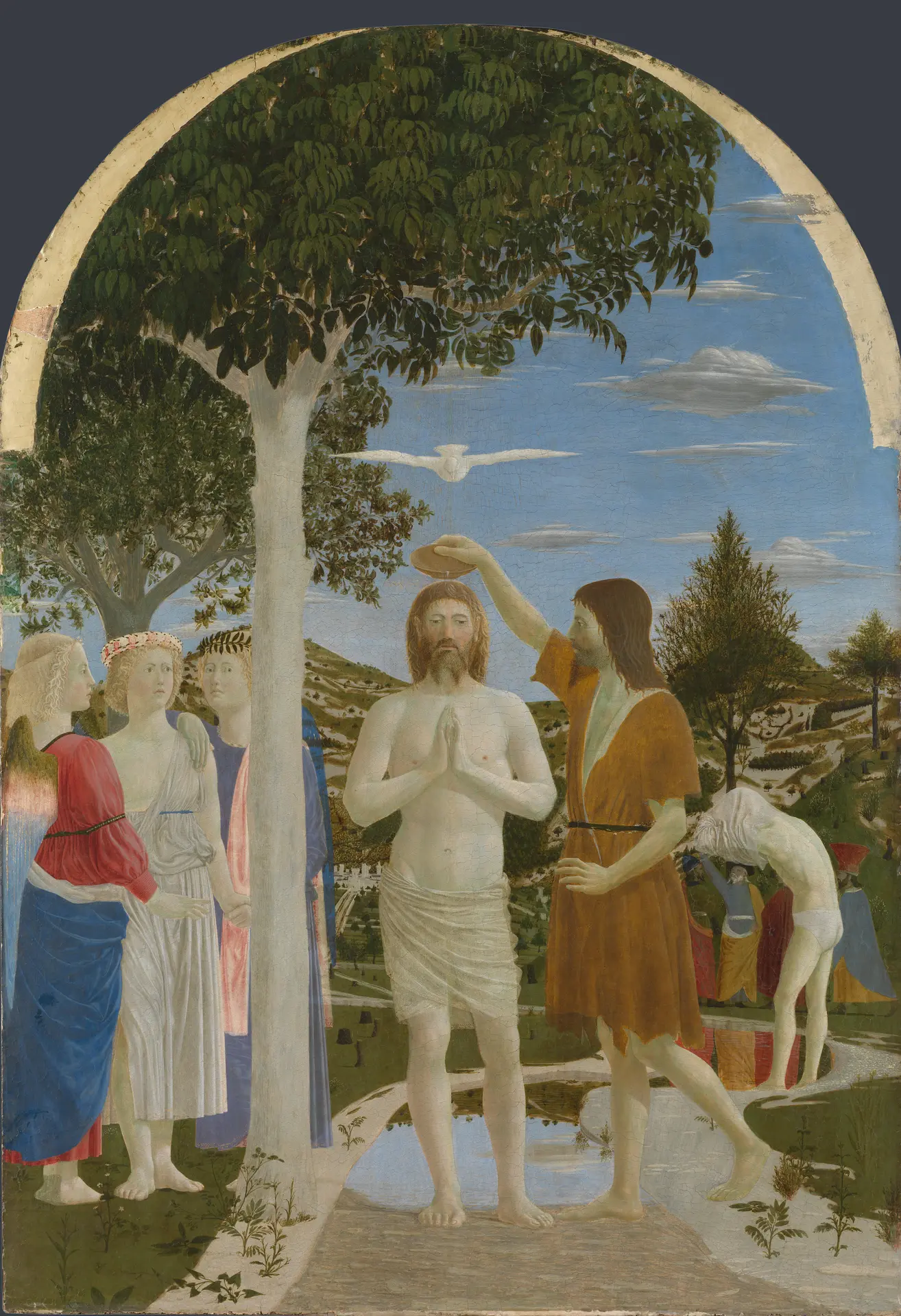
Piero della Francesca, The Baptism of Christ, c. 1450s. National Gallery, London.
And Jesus being baptized, forthwith came out of the water: and lo, the heavens were opened to him: and he saw the Spirit of God descending as a dove, and coming upon him. And behold a voice from heaven, saying: This is my beloved Son, in whom I am well pleased. Matthew 3:16-17
Jesus — who has no sin — submits to the baptism of repentance, identifying himself completely with sinful humanity. In doing so he sanctifies the waters of Baptism for all who will be baptised in his name. The Holy Spirit descends as a dove; the Father's voice speaks from heaven; the Trinity is simultaneously revealed. The fruit is openness to the Holy Spirit — the willingness to receive what God desires to give, and to be led where He desires to lead.
Why Openness to the Holy Spirit?
Openness to the Holy Spirit flows from the Baptism because the mystery shows what receptivity looks like: the Son of God — who has no sin — submits to the baptism of repentance, identifying himself entirely with sinful humanity and thereby sanctifying Baptism for all. The Holy Spirit descends as a dove; the Father’s voice speaks from heaven; the Trinity is simultaneously revealed. The voice at the Jordan fuses two Old Testament texts: Psalm 2:7 (“Thou art my son”, royal/messianic) and Isaiah 42:1 (“my elect, my soul delighteth in him; I have given my spirit upon him”, servant/suffering) — establishing from the outset that Jesus’s mission is both royal and cruciform. Openness to the Spirit means willingness to be led where God leads — accepting the mission and the means He gives. The Jordan typology also matters: Joshua led Israel across the Jordan into the Promised Land; Jesus enters the Jordan to begin leading humanity into the true Promised Land.
Sources: Matthew 3:16–17 · Isaiah 42:1; Psalm 2:7 (behind the Father’s voice) · John Paul II, Rosarium Virginis Mariae §21
“The Baptism in the Jordan is first of all a mystery of light. Here, as Christ descends into the waters, the innocent one who became ‘sin’ for our sake, the heavens open wide and the voice of the Father declares him the beloved Son, while the Spirit descends on him to invest him with the mission which he is to carry out.” John Paul II, Rosarium Virginis Mariae §21
Sacred site: Qasr el-Yahud, Jordan River — traditional site of the Baptism on the western bank, c. 50 km east of Jerusalem. Reopened as an official pilgrimage site in 2011 after decades of closure due to landmines from the 1967 war.
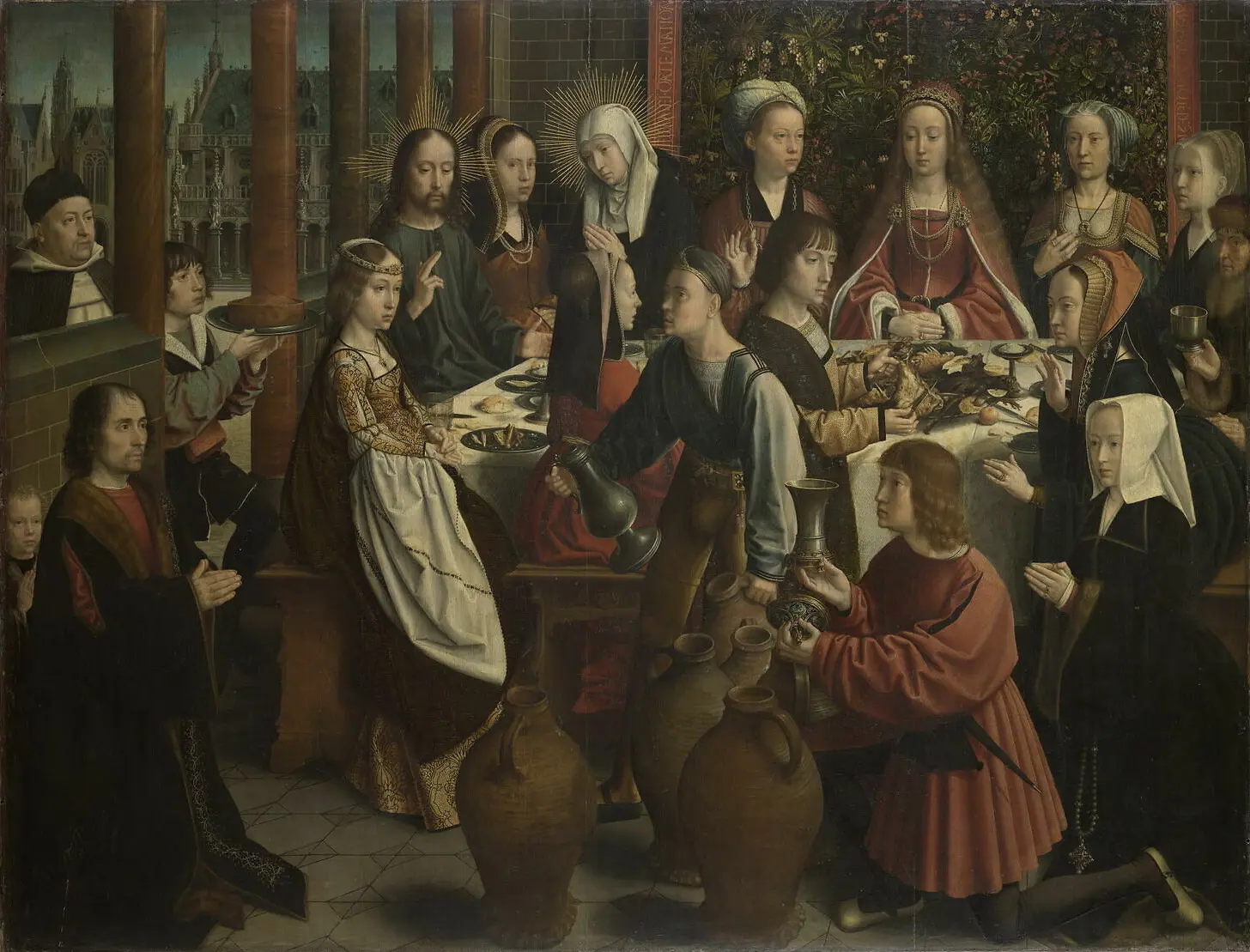
And the third day, there was a marriage in Cana of Galilee: and the mother of Jesus was there. And Jesus also was invited, and his disciples, to the marriage. And the wine failing, the mother of Jesus saith to him: They have no wine. And Jesus saith to her: Woman, what is that to me and to thee? my hour is not yet come. His mother saith to the waiters: Whatsoever he shall say to you, do ye. John 2:1-5
Mary intercedes for a couple whose wedding celebration has run out of wine. She brings the need to her Son, accepts his apparent hesitation without anxiety, and then says to the servants the most important words in the Gospel of John: "Whatsoever he shall say to you, do ye." This is the Marian disposition in its essence. Jesus performs His first public miracle — changing water into wine — anticipating the wine of the Eucharist at the Last Supper. The fruit is "To Jesus through Mary": bringing our needs to Mary, who always leads us to her Son.
Why To Jesus through Mary?
“To Jesus through Mary” flows from Cana because the mystery gives us Mary’s programmatic statement for the Church of every age: “Whatsoever he shall say to you, do ye” (John 2:5). This is the Marian disposition in its essence: she recognises the need, brings it to her Son, accepts his apparent hesitation without anxiety, and directs others entirely to him — never to herself. John Paul II identified these words as “the great maternal counsel which Mary addresses to the Church of every age” (Rosarium Virginis Mariae §21). Jesus performs his first public miracle — changing water into wine — anticipating the Eucharistic wine of the Last Supper. The surplus of wine (six stone jars, each holding twenty to thirty gallons: John 2:6) speaks of divine generosity that exceeds any human occasion. St. Louis de Montfort’s True Devotion to Mary is the theological development of this single fruit.
Sources: John 2:1–5 · John Paul II, Rosarium Virginis Mariae §21 · St. Louis de Montfort, True Devotion to Mary
“Another mystery of light is the first of the signs, given at Cana, when Christ changes water into wine and opens the hearts of the disciples to faith, thanks to the intervention of Mary, the first among believers.” John Paul II, Rosarium Virginis Mariae §21
Sacred site: Kafr Kanna (traditional) or Khirbet Qana (archaeological) — two sites in Galilee contend. The Church of the Wedding Feast in Kafr Kanna, 8 km northeast of Nazareth, is the traditional pilgrimage destination; stone water jars are displayed inside.
Fruit of the Mystery: Christian Witness and Conversion
The time is accomplished, and the kingdom of God is at hand: repent, and believe the gospel. Mark 1:15
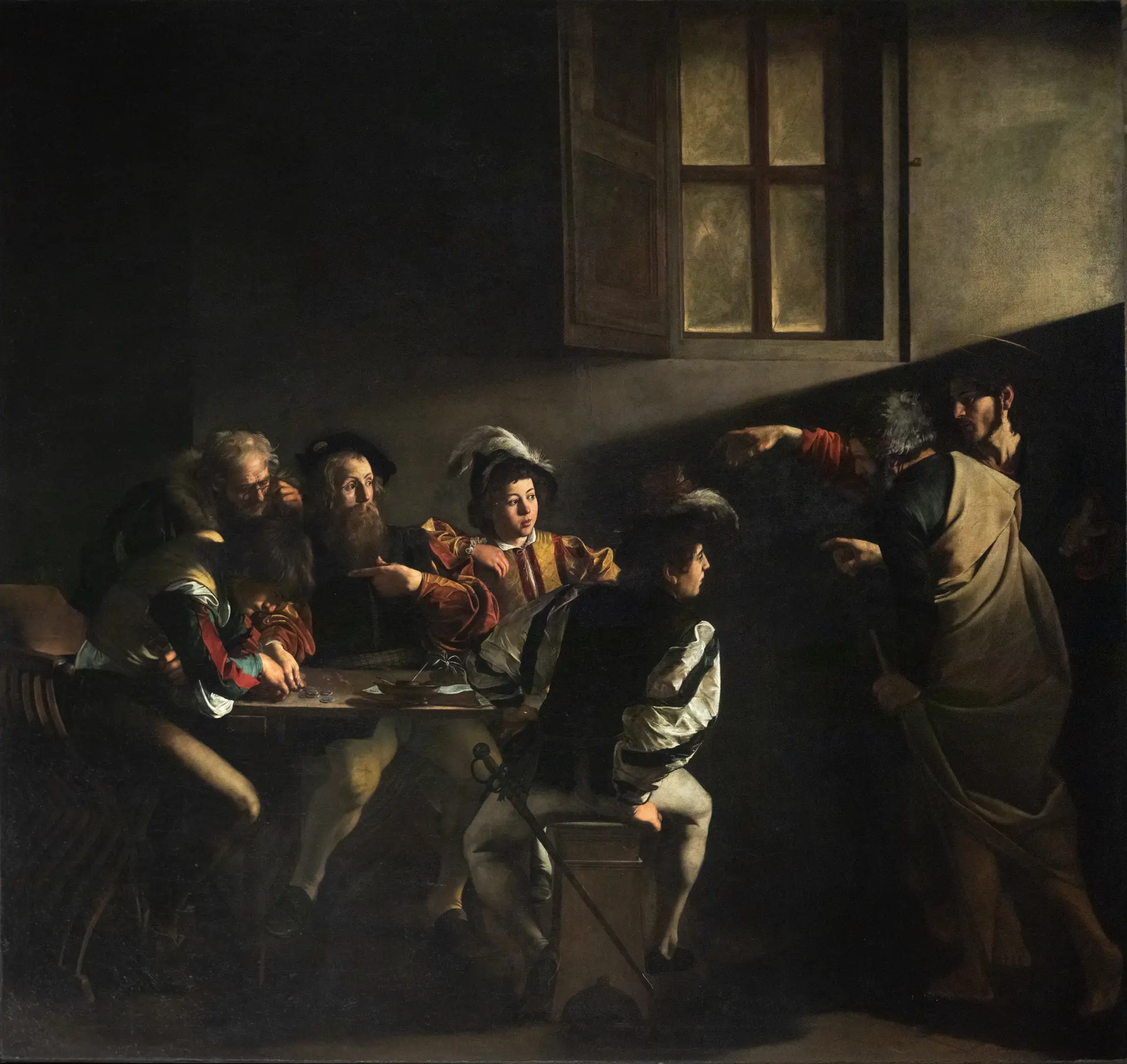
Jesus begins His public ministry with a proclamation: the Kingdom of God has arrived. He calls people to repentance, forgives sins, heals the sick, and gathers disciples. His Beatitudes and Sermon on the Mount reframe every human value. The Kingdom is not a political entity but a reality of mercy, justice, and communion with God — present wherever Christ is present, and growing in the hearts of those who receive him. The fruit is Christian witness and conversion: the turning of our hearts from sin, and the call to carry the good news to others.
Why Christian Witness and Conversion?
Christian Witness and Conversion flows from the Proclamation because the Kingdom’s arrival demands a total reorientation of the person — and then sends the reoriented person out to proclaim it. The Greek word in Mark 1:15 is metanoia — meta (change) + nous (mind) — not merely feeling sorry but a structural change in how one sees and inhabits reality. At Nazareth, Jesus reads Isaiah 61:1–2 and announces, “This day is fulfilled this scripture in your ears” (Luke 4:21) — the inaugural proclamation of the Kingdom in his own person, present tense. The exorcisms are signs of the Kingdom’s arrival: “if I by the finger of God cast out devils, doubtless the kingdom of God is come upon you” (Luke 11:20). But the call is never private: the same Christ who says “repent, and believe the gospel” also calls disciples and sends them out, so that those who receive the word become those who carry it. Aquinas on justification identifies conversio ad Deum — the decisive turning of the will toward God — as the central movement of the soul’s restoration (ST I–II, Q. 113). The fruit is conversion that overflows into witness: the heart turned from sin to grace, and the courage to testify to the One who turned it.
Sources: Mark 1:15 (Greek: metanoia) · Luke 4:18–21 (Isaiah 61:1–2) · Luke 11:20 (Kingdom signs) · Thomas Aquinas, ST I–II, Q. 113
“Another mystery of light is the preaching by which Jesus proclaims the coming of the Kingdom of God, calls to conversion and forgives the sins of all who draw near to him in humble trust.” John Paul II, Rosarium Virginis Mariae §21
Sacred site: Synagogue Church, Nazareth — built over the traditional site of the synagogue where Jesus read Isaiah 61 and made his inaugural proclamation (Luke 4:16–21). A Greek Catholic church now occupies the site.
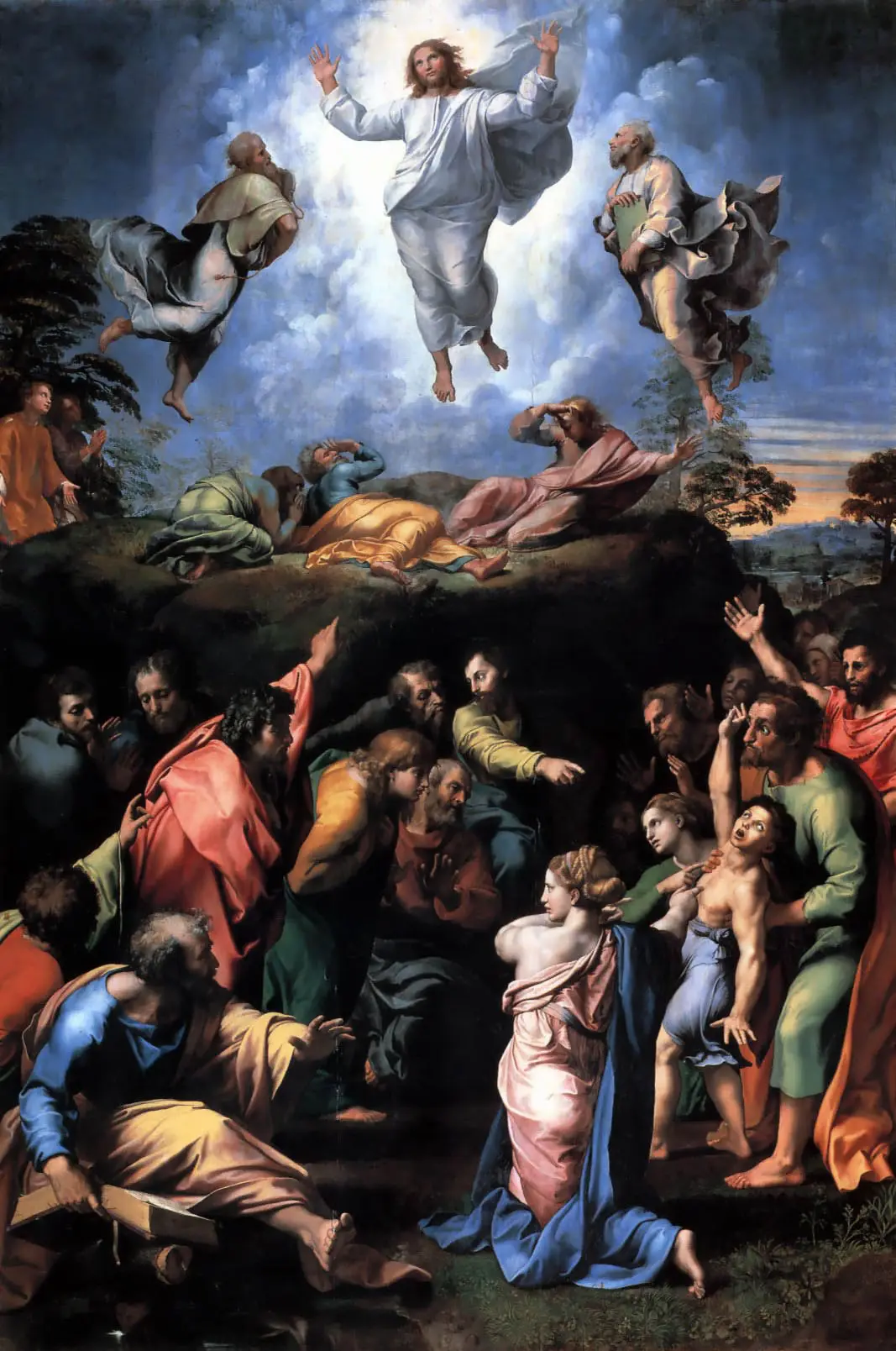
And after six days Jesus taketh unto him Peter and James, and John his brother, and bringeth them up into a high mountain apart: and he was transfigured before them. And his face did shine as the sun: and his garments became white as snow. Matthew 17:1-2
On Mount Tabor, the veil is briefly lifted. The disciples glimpse the divine glory of the One they have been following. Moses and Elijah — the Law and the Prophets — appear beside Jesus, their fulfilment. The Father’s voice speaks from a cloud: "This is my beloved Son... hear ye him" (Matthew 17:5). The Transfiguration is a foretaste of the Resurrection — a glimpse of what redeemed humanity will become in God’s presence. The fruit is spiritual courage: the strength, drawn from the glimpse of Christ’s glory, to follow him even to the Cross.
Why Spiritual Courage?
Spiritual Courage flows from the Transfiguration because the glory is given to fortify the disciples for what is coming. Two details of the text are almost never noted in meditation. First, Luke 9:31 records that Moses and Elijah were speaking with Jesus about his exodon — Luke uses this precise Greek word for “exodus” — to be accomplished in Jerusalem; the Cross is framed from within the glory as a new Exodus. Second, Peter’s impulse to build three skenai (tabernacles, Matthew 17:4) recalls the Feast of Tabernacles (Sukkot), the feast of God dwelling among his people — Peter wants to freeze the glory before the Cross. The Father’s voice interrupts: “hear ye him.” Thomas Aquinas states the purpose of Tabor plainly: Christ showed his glory to strengthen the hearts of the disciples, so that the scandal of the Cross would not break their faith (ST III, Q. 45, a. 1). The vision is armour against the coming darkness. The fruit is spiritual courage: the strength drawn from having glimpsed Christ’s glory to follow him even toward Calvary, trusting that the Passion opens onto the Resurrection.
Sources: Luke 9:31 (Greek: exodon — Exodus typology) · Matthew 17:4 (skenai — Feast of Tabernacles/Sukkot) · Thomas Aquinas, ST III, Q. 45, a. 1
“The mystery of light par excellence is the Transfiguration, traditionally believed to have taken place on Mount Tabor. The glory of the Godhead shines forth from the face of Christ as the Father commands the astonished Apostles to ‘listen to him’ and to prepare to experience with him the agony of the Passion, so as to come with him to the joy of the Resurrection and a life transfigured by the Holy Spirit.” John Paul II, Rosarium Virginis Mariae §21
Sacred site: Basilica of the Transfiguration, Mount Tabor — built 1924 by Antonio Barluzzi atop a 588-metre hill above the Jezreel Valley. Tradition since the 4th century locates the Transfiguration here; some modern scholars prefer Mount Hermon.
Fruit of the Mystery: Love of Our Eucharistic Lord
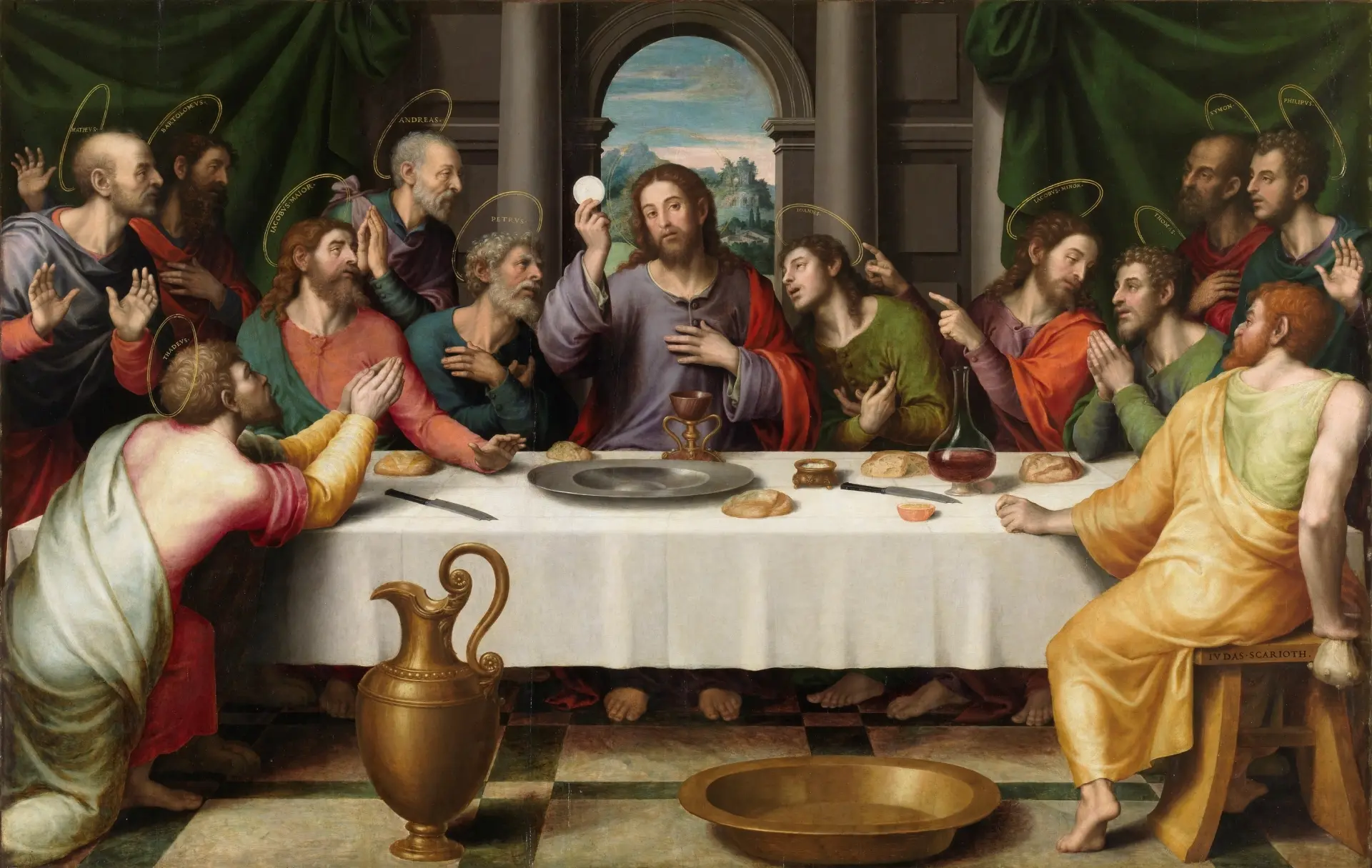
And whilst they were at supper, Jesus took bread, and blessed, and broke: and gave to his disciples, and said: Take ye, and eat. This is my body. Matthew 26:26
At the Last Supper, on the night before His death, Jesus gives us the Eucharist — His Body and Blood under the appearances of bread and wine. He commands: "Do this for a commemoration of me" (Luke 22:19). The Eucharist is the source and summit of Christian life; the Mass is its perpetual renewal. Every Hail Mary of the Rosary is offered through the hands of Mary, who received the Body of Christ in the Incarnation and stood at the foot of the Cross as that same Body was broken for us. The fruit is love of our Eucharistic Lord: the reverence and love owed to Christ truly present under the appearances of bread and wine.
Why Love of Our Eucharistic Lord?
Love of Our Eucharistic Lord flows from the Institution because the mystery is God choosing to remain — under bread and wine, available to be received, visited, and loved until the end of time. The Last Supper enacts what Jesus had promised in the Bread of Life discourse (John 6) and fulfils Jeremiah 31:31–34’s promise of a new covenant written on hearts; his words, “This is the chalice, the new testament in my blood” (Luke 22:20), are the explicit fulfilment of that prophecy. At the commission of Pope Urban IV in 1264, Thomas Aquinas wrote the entire liturgy for Corpus Christi — the Adoro te devote, the Pange Lingua, the Tantum Ergo — and each stanza is less a treatise than an act of love before the Real Presence, the most personal theological work of his life. John Paul II, in Ecclesia de Eucharistia §25 (2003), draws the same warmth from the same source: “It is pleasant to spend time with him, to lie close to his breast like the Beloved Disciple and to feel the infinite love present in his heart.” The fruit is love of our Eucharistic Lord: the heart’s response to a God who gives himself as food and waits for us in the tabernacle.
Sources: Jeremiah 31:31–34 · John 6:51–58 · Luke 22:20 · Thomas Aquinas, Adoro te devote (1264, commissioned by Urban IV) · John Paul II, Ecclesia de Eucharistia §25 (2003)
“A final mystery of light is the institution of the Eucharist, in which Christ offers his body and blood as food under the signs of bread and wine, and testifies ‘to the end’ his love for humanity, for whose salvation he will offer himself in sacrifice.” John Paul II, Rosarium Virginis Mariae §21
Sacred site: The Cenacle (Upper Room), Mount Zion, Jerusalem — the room where Jesus said “this is my body” for the first time. The same room as Pentecost. Now a Crusader-vaulted hall with an Ottoman mihrab.
Live community · Prayer streak · No account needed
What are the Luminous Mysteries and when are they prayed?
Each decade of the Rosary meditates on one Mystery — an event from the lives of Jesus and Mary drawn from Scripture and the tradition of the Church. For each decade: announce the Mystery, pray one Our Father, ten Hail Marys while meditating on the Mystery, then one Glory Be and the Fatima Prayer.
The five Luminous Mysteries (Mysteries of Light) are: The Baptism of Christ in the Jordan (Matthew 3:16-17), The Wedding Feast at Cana (John 2:1-12), The Proclamation of the Kingdom of God (Mark 1:15), The Transfiguration (Matthew 17:1-9), and The Institution of the Eucharist (Matthew 26:26-28). They are prayed on Thursdays.
Who added the Luminous Mysteries?
Pope John Paul II introduced the Luminous Mysteries in his 2002 Apostolic Letter Rosarium Virginis Mariae. He described them as optional, proposing Thursday as their day. They cover the public ministry of Jesus, the period least represented in the original fifteen mysteries of the Rosary.
What are the fruits of the Luminous Mysteries?
The fruits of the Luminous Mysteries are: Baptism of Christ — Openness to the Holy Spirit; Wedding at Cana — To Jesus through Mary; Proclamation of the Kingdom — Christian Witness and Conversion; Transfiguration — Spiritual Courage; Institution of the Eucharist — Love of Our Eucharistic Lord.
What day are the Luminous Mysteries prayed?
The Luminous Mysteries are traditionally prayed on Thursday, as proposed by Pope John Paul II in 2002. They can also be prayed on any day of the week at the discretion of the person praying the Rosary.
What are all five Luminous Mysteries of the Rosary?
The five Luminous Mysteries (Mysteries of Light), added by Pope John Paul II in 2002, are: 1. The Baptism of Christ in the Jordan — the heavens open and the Father speaks: 'This is my beloved Son' (Matthew 3:16-17). 2. The Wedding Feast at Cana — Mary intercedes and Jesus performs His first public miracle (John 2:1-12). 3. The Proclamation of the Kingdom of God — Jesus announces the Kingdom and calls all to repentance (Mark 1:15). 4. The Transfiguration — on the mountain, Jesus reveals His divine glory to Peter, James, and John (Matthew 17:1-9). 5. The Institution of the Eucharist — at the Last Supper, Jesus gives us His Body and Blood (Matthew 26:26-28).
What is the spiritual fruit of each Luminous Mystery?
The fruits (virtues) of the Luminous Mysteries, as given in the Dominican tradition, are: The Baptism of Christ in the Jordan — Openness to the Holy Spirit; The Wedding Feast at Cana — To Jesus through Mary; The Proclamation of the Kingdom — Christian Witness and Conversion; The Transfiguration — Spiritual Courage; The Institution of the Eucharist — Love of Our Eucharistic Lord.
What is the First Luminous Mystery?
The First Luminous Mystery is the Baptism of Christ in the Jordan — Jesus coming to John the Baptist to be baptised, upon which the heavens opened, the Holy Spirit descended as a dove, and the Father declared: 'This is my beloved Son, in whom I am well pleased' (Matthew 3:16-17). This theophany reveals the Trinity and marks the beginning of Jesus's public ministry. Its spiritual fruit is openness to the Holy Spirit. It is prayed on Thursday, the day assigned to the Luminous Mysteries by Pope John Paul II.
When and why were the Luminous Mysteries added to the Rosary?
The Luminous Mysteries (Mysteries of Light) were added by Pope John Paul II in his Apostolic Letter Rosarium Virginis Mariae, published 16 October 2002, on the 24th anniversary of his pontificate. He noted that the traditional three Mystery sets — Joyful, Sorrowful, Glorious — covered the Incarnation, Passion, and Resurrection but omitted Christ's public ministry. The Luminous Mysteries fill that gap, covering the years from the Baptism of Christ to the Last Supper. John Paul II presented them as a recommendation, not a requirement — they remain optional but are now prayed by the vast majority of Catholics.
Why is Openness to the Holy Spirit the fruit of Christ's Baptism?
Openness to the Holy Spirit is the fruit of Christ's Baptism because the mystery shows what receptivity looks like: the Son of God submits to the baptism of repentance, identifying himself with sinful humanity and sanctifying Baptism for all. The Spirit descends; the Father speaks. The voice at the Jordan fuses Psalm 2:7 (royal/messianic) and Isaiah 42:1 (servant/suffering) — establishing Jesus's mission as both royal and cruciform. Openness to the Spirit means willingness to be led where God leads, accepting the mission and means He gives rather than those we would choose.
Why is 'To Jesus through Mary' the fruit of the Wedding at Cana?
To Jesus through Mary is the fruit of Cana because the mystery gives us Mary's programmatic statement for the Church: 'Whatsoever he shall say to you, do ye' (John 2:5). This is the Marian disposition: she recognises the need, brings it to her Son, accepts his response without anxiety, and directs others entirely to him. John Paul II identified these words as 'the great maternal counsel which Mary addresses to the Church of every age' (Rosarium Virginis Mariae §21). St. Louis de Montfort's True Devotion to Mary is the theological development of this fruit.
Why is Christian Witness and Conversion the fruit of the Proclamation of the Kingdom?
Christian Witness and Conversion is the fruit of the Proclamation because the Kingdom's arrival demands a total reorientation of the person — and then sends the reoriented person out to proclaim it. The Greek word in Mark 1:15 is metanoia — not merely feeling sorry but a structural change in how one sees and inhabits reality. At Nazareth, Jesus reads Isaiah 61:1-2 and announces: 'This day is fulfilled this scripture in your ears' (Luke 4:21). The exorcisms are signs: 'if I by the finger of God cast out devils, doubtless the kingdom of God is come upon you' (Luke 11:20). The call is never private: those who receive the word are sent to carry it. Aquinas: conversio ad Deum — the decisive turning of the will toward God — is the central movement of the soul's restoration (ST I-II, Q. 113).
Why is Spiritual Courage the fruit of the Transfiguration?
Spiritual Courage is the fruit of the Transfiguration because the glory is given to fortify the disciples for what is coming. Two details most often missed: Luke 9:31 records Moses and Elijah speaking about Jesus's exodon (the Greek word for 'exodus') to be accomplished in Jerusalem — framing the Cross as a new Exodus from within the glory. The Father interrupts Peter's wish to stay on the mountain with the command 'hear ye him' (Matthew 17:5). Aquinas states the purpose of Tabor plainly: Christ revealed his glory to strengthen the hearts of the disciples so that the scandal of the Cross would not break their faith (ST III, Q. 45, a. 1). The fruit is the courage, drawn from that glimpse of glory, to follow Christ even toward Calvary.
Why is Love of Our Eucharistic Lord the fruit of the Institution of the Eucharist?
Love of Our Eucharistic Lord is the fruit of the Institution because the mystery is God choosing to remain present under bread and wine — to be received, visited, and loved until the end of time. The Last Supper fulfils Jeremiah 31:31-34 (the new covenant written on hearts) and what Jesus promised in John 6 (the Bread of Life discourse). At the commission of Urban IV in 1264, Thomas Aquinas wrote the entire Corpus Christi liturgy — the Adoro te devote, the Pange Lingua, the Tantum Ergo — each stanza an act of love before the Real Presence. John Paul II: 'It is pleasant to spend time with him, to lie close to his breast like the Beloved Disciple and to feel the infinite love present in his heart' (Ecclesia de Eucharistia §25).